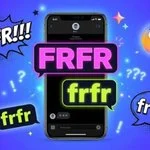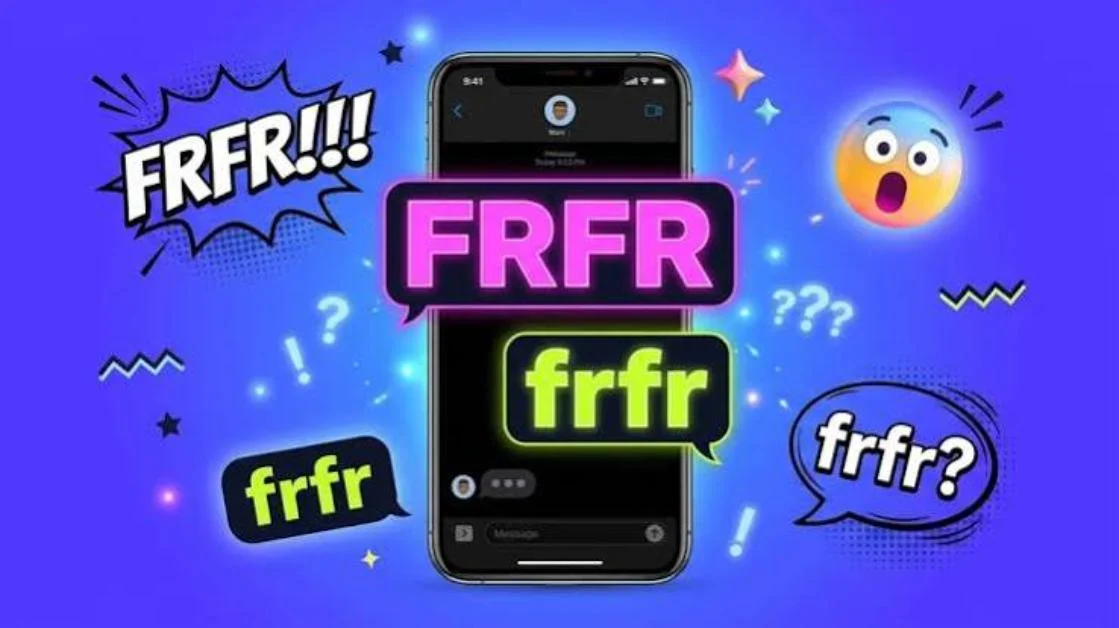
If you spend time chatting with friends online, you may have seen the abbreviation FRFR in text messages, comments, or social media posts. ]
You might wonder what it means and why people use it so often.
The good news is that FRFR has a simple meaning. It stands for “for real, for real” and is used to show that someone is serious, honest, or strongly agrees with something. People often use it when they want to make their feelings clear without writing a long message.
FRFR is common on platforms like WhatsApp, Instagram, TikTok, and Snapchat.] It can express surprise, excitement, agreement, or frustration, depending on the conversation. In this guide, you will learn the FRFR meaning in text, its origin, how people use it, and how to reply when someone sends it to you. You will also find simple examples to help you understand this popular internet slang.
What Does FRFR Mean in Text & Chat?

FRFR means “for real, for real.” It is a casual abbreviation that people use in text messages and online conversations to add extra meaning to their words. It often shows that someone truly means what they say.
The word “real” already suggests honesty or truth. Repeating it makes the message sound stronger. For example, when someone says, “That movie was amazing, frfr,” they mean they genuinely enjoyed the movie.
FRFR can have different meanings depending on the situation. It may show that a person agrees with you, wants you to take them seriously, or feels strongly about something.
Here are the most common uses of FRFR:
- To show honesty: The person wants you to know they are telling the truth.
- To express agreement: They strongly agree with your opinion.
- To add emphasis: They want to make a statement sound more serious.
- To show strong feelings: They may be excited, upset, happy, or disappointed.
- To confirm something: They want to make it clear that something is genuine.
Examples of FRFR in Text
- “You are my best friend frfr ❤️” — The friendship is genuine.
- “This food is so good frfr 😋” — The person truly enjoys the food.
- “I need a vacation frfr.” — They seriously want a break.
- “He is funny frfr 😂” — They really think he is funny.
- “I am not joking frfr.” — They want you to take them seriously.
FRFR is informal, so it works best in friendly chats, comments, and social media posts. It is usually not suitable for formal emails or professional documents.
Full Form, Stands For & Short Meaning of FRFR
The full form of FRFR is “for real, for real.” It is formed by repeating the abbreviation FR, which stands for “for real.”
People often use FRFR when one “for real” does not feel strong enough. The repeated phrase adds emphasis and makes the message sound more genuine.
Here is a simple breakdown:
- FR: For real.
- FRFR: For real, for real.
- Short meaning: Seriously, honestly, or truly.
- Main purpose: To show strong agreement, honesty, or emphasis.
- Tone: Usually casual, friendly, and expressive.
For example, imagine your friend says, “I think we should meet this weekend.” You reply, “FRFR, we haven’t seen each other in ages.” In this case, you strongly agree and want to make your point clear.
FRFR can also appear at the start or in the middle of a sentence. Its position does not change its basic meaning.
Examples include:
- “FRFR, that was the best concert ever!”
- “I am tired frfr.”
- “You need to try this game frfr.”
- “FRFR? Are you serious?”
Notice that the last example uses FRFR as a question. Here, the speaker may be asking whether something is true or whether the other person is serious.
Although FRFR is easy to understand, the exact feeling behind it depends on the conversation. A person may use it playfully, seriously, or even sarcastically.
The easiest way to remember it is this: FRFR means that someone wants to stress that something is real, true, or seriously meant.
Origin, History & First Known Use of FRFR
FRFR developed from the older informal phrase “for real.” People have used “for real” in everyday speech to express honesty, surprise, and seriousness for many years. As texting and online messaging became more popular, people began shortening common expressions to save time.
The abbreviation FR became a quick way to write “for real.” Later, FRFR appeared as a repeated form that adds extra emphasis. It follows a common pattern in informal speech: repeating a word or phrase to make a feeling stronger.
For example, people may say “really, really” when they want to show strong agreement. FRFR serves a similar purpose in online conversations.
It is difficult to identify one person or one exact date as the creator of FRFR. Internet slang often develops across chat rooms, text messages, online communities, and social platforms. Its use can spread gradually rather than beginning with one clear source.
FRFR became especially familiar among younger internet users who communicate through short messages, comments, and videos. Social media helped make it more visible because people could use it in captions, reactions, memes, and discussions.
Some common factors behind its popularity include:
- Faster communication: Four letters are quicker to type than the full phrase.
- Stronger expression: Repeating “for real” makes a statement more emphatic.
- Online culture: Short forms are common in comments and direct messages.
- Easy recognition: Many users understand it without needing an explanation.
- Flexible use: It fits many subjects, from jokes to serious conversations.
Today, FRFR is a familiar part of internet slang. Its history reflects a broader change in how people communicate online: long phrases often become shorter, while repeated letters or words help preserve emotion and emphasis.
How People Use FRFR in Daily Conversations
People use FRFR in everyday conversations when they want to sound honest, agree strongly, or emphasize a feeling. It is common in messages between friends, family members, classmates, and people who communicate casually online.
One popular use is to show agreement. If your friend says, “This week has been exhausting,” you might reply, “FRFR, I need the weekend.” Your response means that you understand and feel the same way.
FRFR is also useful when someone wants to express a serious opinion. For example, “You should be proud of yourself frfr” tells the other person that you genuinely mean the compliment.
It can also appear in playful conversations. Friends may use it after a funny comment or an exaggerated statement to make the message more expressive.
Common Daily Uses of FRFR
- Agreeing with someone: “FRFR, that exam was hard.”
- Giving a compliment: “You look amazing frfr.”
- Showing frustration: “My phone battery dies so fast frfr.”
- Expressing excitement: “We are finally going on vacation frfr!”
- Being honest: “I really miss those days frfr.”
- Confirming a statement: “FRFR? That actually happened?”
The meaning can change slightly with the tone of the message. For instance, “I am serious frfr” sounds firm, while “That song is perfect frfr 😭” may express excitement or admiration.
FRFR can also help make a short message feel more personal. Instead of sending only “I agree,” someone might write “FRFR” to sound more natural and relaxed.
However, it is best to consider your audience. Your close friends will probably understand the abbreviation, but a teacher, manager, or new contact may not know what it means.
Use FRFR when it fits your usual style of conversation. You do not need to add it to every message. A few natural uses are enough to communicate your point clearly.
FRFR Meaning Across WhatsApp, Instagram, TikTok & Snapchat
FRFR generally means “for real, for real” across major social media platforms. Its basic meaning stays the same, but the way people use it can vary depending on the platform and type of conversation.
FRFR on WhatsApp
On WhatsApp, FRFR often appears in private messages and group chats. Friends may use it to agree with each other, share honest feelings, or emphasize a point.
Examples:
- “FRFR, we need to hang out soon.”
- “That was the funniest thing ever frfr 😂”
- “I am telling you the truth frfr.”
It is especially useful when people want to keep messages short and casual.
FRFR on Instagram
On Instagram, FRFR may appear in comments, direct messages, captions, and replies to Stories. People use it to support an opinion or react to a photo, video, or relatable post.
Examples:
- “This outfit is perfect frfr 🔥”
- “FRFR, everyone needs a friend like this.”
- “That quote hits different frfr.”
FRFR on TikTok
TikTok users often use FRFR in comments, video captions, and conversations about funny or relatable content. It can express agreement with a creator or emphasize a reaction.
Examples:
- “This is so relatable frfr.”
- “FRFR, I was thinking the same thing.”
- “The ending surprised me frfr 😭”
FRFR on Snapchat
On Snapchat, FRFR may appear in snaps and private chats. It can help someone show that they mean a compliment, question, or personal statement.
Examples:
- “You looked great today frfr 😊”
- “FRFR, are you coming tonight?”
- “I miss our old memories frfr.”
The key point: FRFR does not have a separate official meaning on each platform. It usually carries the same idea of honesty, seriousness, or strong agreement. The surrounding message tells you which meaning makes the most sense.
Different Meanings of FRFR in Other Fields

FRFR is mainly known as internet slang for “for real, for real.” In everyday texting and social media, this is the meaning most people are likely to intend.
However, abbreviations can have different meanings in specialized fields. A group, company, online community, or technical document may use the same letters for something unrelated to texting slang.
For this reason, you should not assume that every appearance of FRFR means “for real, for real.” The subject and surrounding words matter.
For example, if you see FRFR in a message from a friend after a joke, it probably expresses emphasis or agreement. If you see the letters in a technical document, database, or workplace report, they may be part of an organization-specific abbreviation.
How to Understand FRFR in Different Contexts
- Text messaging: Usually means “for real, for real.”
- Social media: Often expresses agreement, excitement, or sincerity.
- Online gaming: May be used to show that a player is serious or strongly agrees.
- Workplace communication: Could be an internal abbreviation, depending on the organization.
- Technical writing: Requires context before the meaning can be identified.
It is important not to invent a specialized full form when there is no evidence for it. FRFR does not have one universally recognized alternative expansion across all professional fields.
If you encounter it outside a casual conversation, look at the sentence in which it appears. Check whether the letters are part of a title, a product name, a technical term, or an informal comment.
You can also ask the writer what they mean. A quick question is often more reliable than guessing.
For most people searching for the FRFR meaning in text, the useful answer is simple: it means “for real, for real.” Other interpretations should only be considered when the context clearly points to a different use.
Common Confusions, Mistakes & Wrong Interpretations
Although FRFR is easy to understand, people sometimes confuse it with other abbreviations or misunderstand the tone behind it.
One common mistake is thinking that FRFR is a completely different phrase from FR. In reality, FR usually means “for real,” while FRFR repeats the abbreviation to add emphasis.
Another mistake is assuming that FRFR always expresses anger or frustration. It can be used in serious conversations, but it can also express happiness, excitement, agreement, or admiration.
Common Mistakes to Avoid
- Confusing FR with FRFR: FR means “for real,” while FRFR means “for real, for real.”
- Assuming it is always serious: People can use FRFR jokingly or playfully.
- Thinking it is rude: The abbreviation is not rude by itself.
- Ignoring the context: The surrounding message helps explain the speaker’s intention.
- Using it in every sentence: Too much slang can make a message feel repetitive.
- Treating it as formal language: FRFR is best suited to casual communication.
For example, if someone writes, “You are the best frfr ❤️,” they are probably giving a sincere compliment. There is no reason to assume they are angry.
On the other hand, “FRFR, stop doing that” may sound firm or frustrated because of the words surrounding the abbreviation.
FRFR can also be confused with expressions such as “no cap,” “I swear,” and “seriously.” These phrases overlap in meaning, but they are not identical in every situation.
For instance, “no cap” often stresses that a statement is not a lie. FRFR emphasizes that someone genuinely means what they are saying. Both can communicate honesty, but they may carry slightly different tones.
The best way to understand FRFR is to read the whole message rather than focusing on the abbreviation alone. Pay attention to the topic, the relationship between the speakers, and any emojis or punctuation. These clues can help you understand whether the person is agreeing, joking, or making a serious point.
Similar Terms, Alternatives & Related Slang
FRFR belongs to a larger group of internet abbreviations that people use to express honesty, agreement, and strong feelings. Learning a few related terms can help you understand online conversations more easily.
Here are some common alternatives and related expressions.
- FR: Short for “for real.” It is similar to FRFR but usually provides less emphasis.
- No cap: Means “no lie” or “I am being honest.”
- TBH: Stands for “to be honest.” It often introduces a personal opinion.
- ISTG: Stands for “I swear to God.” It can express strong feelings or insist that something is true.
- ONG: Commonly means “on God” and may emphasize sincerity or agreement.
- NGL: Means “not gonna lie.” It is often used before an honest opinion.
- IKR: Means “I know, right?” It commonly expresses agreement.
- Seriously: A regular word used to show that a person means something.
- Literally: Often used for emphasis in casual speech, though its precise meaning depends on the sentence.
Examples of Similar Slang
- “FR, that movie was amazing.”
- “No cap, your drawing is great.”
- “TBH, I prefer the first option.”
- “NGL, I was nervous.”
- “IKR! That was so funny 😂”
- “FRFR, we had the best day.”
Although these expressions can overlap, they are not always interchangeable.
For example, “TBH, I don’t like this song” introduces an honest opinion. “FRFR, this song is amazing” emphasizes how strongly someone likes it.
If you want a short alternative to FRFR, you can use FR. If you want to stress honesty, “no cap” or “honestly” may work. If you want to show agreement, “exactly” or “I agree” may be clearer.
Internal Linking Suggestions
If you are building a website about texting slang, consider linking this article to related pages such as:
- FR Meaning in Text — Explain the shorter form of FRFR.
- No Cap Meaning in Text — Cover slang used to express honesty.
- TBH Meaning in Text — Explain how people introduce honest opinions.
- NGL Meaning in Text — Explore another common honesty-related abbreviation.
- ONG Meaning in Text — Describe a phrase used for emphasis and agreement.
- IKR Meaning in Text — Explain how people show agreement.
- ISTG Meaning in Text — Cover another expression used to stress a statement.
Place these links naturally in relevant paragraphs. This helps readers discover related terms and makes it easier for search engines to understand how your articles connect.
Examples of FRFR in Real Chat Situations
The easiest way to learn FRFR is to see how people use it in everyday messages. Its meaning usually becomes clear when you read the full conversation.
Here are some realistic examples of FRFR in text chats.
1. Agreeing With a Friend
Friend: “This homework is so hard.”
You: “FRFR 😭 I have been stuck on it all day.”
Meaning: You strongly agree that the homework is difficult.
2. Giving a Compliment
Friend: “Do you like my new haircut?”
You: “Yes, it looks amazing frfr ❤️”
Meaning: You genuinely like the haircut.
3. Talking About Food
Friend: “This pizza is the best.”
You: “FRFR, we need to order it again 🍕”
Meaning: You agree that the pizza tastes great.
4. Expressing Feelings
Friend: “I miss our school days.”
You: “FRFR, those memories were special.”
Meaning: You truly miss those times.
5. Showing Excitement
Friend: “We are going to the concert tomorrow!”
You: “FRFR? I cannot wait! 🎉”
Meaning: You are surprised or excited and want to confirm the news.
6. Being Serious
Friend: “Are you really moving to another city?”
You: “Yes, frfr. I am leaving next month.”
Meaning: You are confirming that the news is true.
7. Reacting to a Funny Video
Friend: “This video is hilarious 😂”
You: “FRFR, I watched it five times.”
Meaning: You genuinely find the video funny.
8. Supporting Someone
Friend: “I feel like I am not doing enough.”
You: “You are trying your best frfr. Be proud of yourself.”
Meaning: You sincerely believe the person is doing well.
These examples show that FRFR can fit many situations. It can make a message more expressive, but it does not replace the need to understand the full conversation.
How to Reply When Someone Says FRFR
Your reply to FRFR depends on what the other person is saying. Since it often expresses agreement or sincerity, you can respond naturally without using another abbreviation.
If someone says, “This food is amazing frfr,” you might agree by saying, “I know, right?” If they use FRFR to share serious news, a thoughtful response may be more appropriate.
Simple Replies to FRFR
- When you agree: “Exactly!”
- When you feel the same way: “FR, I agree.”
- When someone gives a compliment: “Thank you! ❤️”
- When someone shares good news: “That is awesome!”
- When someone confirms something: “Got it.”
- When you are surprised: “Wait, really?”
- When someone is being serious: “I understand what you mean.”
- When you want to keep it casual: “No cap 😂”
Example Conversations
Example 1: Agreement
Friend: “This weekend went by too fast frfr.”
You: “FR 😭 I need another day off.”
Example 2: Compliment
Friend: “You are a great friend frfr.”
You: “Aww, thank you! You are too ❤️”
Example 3: Serious News
Friend: “I am changing schools next month frfr.”
You: “Really? How are you feeling about it?”
Example 4: Excitement
Friend: “We are finally meeting tomorrow frfr!”
You: “Yesss! I cannot wait 🎉”
You do not need to reply with FRFR every time someone uses it. A simple, honest response is often better.
If you are unsure whether the person is joking or serious, ask a quick question such as, “Wait, do you mean that?” This helps avoid misunderstandings.
The main goal is to respond in a way that matches the conversation. Use casual slang with friends when it feels natural, and choose clear words when the topic is important.
Is FRFR Still Popular? Trends & Online Usage

FRFR remains a recognizable form of internet slang, especially in casual messaging and social media conversations. It fits the way people communicate online: short messages, quick reactions, and expressions that add emotion without requiring long explanations.
However, slang changes constantly. Some abbreviations become more popular for a while, while others remain familiar but are used less often in certain communities. The exact popularity of FRFR can vary by age group, platform, region, and online trend.
FRFR is useful because its meaning is easy to understand once you know the phrase behind it. People can add it to a message without changing the main sentence.
For example:
- “That game was great frfr.”
- “FRFR, I need more sleep.”
- “You deserve the best frfr ❤️”
- “This trend is funny frfr 😂”
These messages show why the abbreviation remains practical. It can emphasize an opinion, support a friend’s statement, or express a feeling in only four letters.
Why People Continue to Use FRFR
- It is short: It saves typing time.
- It adds emphasis: It makes a statement sound stronger.
- It feels conversational: It fits the relaxed style of online chats.
- It works across platforms: People can use it in comments, captions, and private messages.
- It is flexible: It works with jokes, compliments, opinions, and serious statements.
FRFR is not limited to one social media app. You may see it in text messages, gaming chats, online discussions, and videos.
Still, you should avoid assuming that every person understands every abbreviation. Some readers may be unfamiliar with FRFR, especially if they do not spend much time on social media.
There is also no need to use it simply because it is popular. Clear communication matters more than following every online trend.
Overall, FRFR is a useful piece of casual internet language. Knowing what it means can help you understand messages, comments, and conversations without getting confused.
Frequently Asked Questions
1. What does FRFR mean in text?
FRFR means “for real, for real.” People use it to show honesty, strong agreement, or emphasis in casual conversations.
2. What does FRFR stand for?
FRFR stands for “for real, for real.” It repeats the abbreviation FR to make a statement sound stronger.
3. What does FRFR mean from a girl?
When a girl texts FRFR, she usually means that she is serious, honest, or strongly agrees with something. The exact meaning depends on the message and the conversation.
4. What does FRFR mean from a boy?
When a boy uses FRFR, it generally means “for real, for real.” He may be agreeing with you, emphasizing a point, or showing that he genuinely means what he says.
5. What does FRFR mean on WhatsApp?
On WhatsApp, FRFR usually means “for real, for real.” Friends use it in private messages and group chats to express agreement, sincerity, or strong feelings.
6. What does FRFR mean on TikTok?
On TikTok, FRFR is commonly used in comments, captions, and replies to show that a video is relatable, funny, or worth agreeing with.
7. Is FRFR the same as FR?
They are similar but not exactly the same in tone. FR means “for real,” while FRFR means “for real, for real” and often adds more emphasis.
8. Is FRFR rude or disrespectful?
No, FRFR is not rude by itself. It is a casual abbreviation. The words around it determine whether the message sounds friendly, serious, or frustrated.
9. How should I reply to FRFR?
You can reply with “Exactly,” “I agree,” “For real,” or a suitable emoji. Choose a response that fits the message and your relationship with the sender.
10. Can I use FRFR in formal writing?
It is best to avoid FRFR in formal emails, reports, and professional documents. Use phrases such as “seriously,” “honestly,” or “I genuinely agree” instead.
Conclusion:
Understanding the FRFR meaning in text is simple once you know that it stands for “for real, for real.” People use this popular internet abbreviation to show honesty, strong agreement, excitement, and genuine feelings.
You may see it in WhatsApp messages, Instagram comments, TikTok videos, Snapchat chats, and other online conversations.
The meaning can change slightly depending on the situation, but the main idea is to emphasize that something is true or seriously meant. For example, “You are an amazing friend frfr” expresses a sincere compliment, while “FRFR, that exam was hard” shows strong agreement.
When someone sends you FRFR, you can reply naturally with words such as “Exactly,” “I agree,” or “Really?” depending on the context.
Remember that FRFR is informal slang, so it works best in casual conversations rather than professional writing.
Once you understand this abbreviation, you can recognize it easily and follow online conversations with more confidence.