When someone sends “ID” in a text or chat, it can mean different things depending on the conversation. In many casual messages, ID is used as a short form of “I don’t”, especially when it appears in phrases such as “idk” for “I don’t know.
” However, ID can also mean “identification,” “ID number,” “identity,” or even “I’d” in some informal writing when people shorten words.
This is why people often search for the ID meaning in text.
A short abbreviation can be confusing when there is little context around it. The meaning usually becomes clear by looking at the words before and after it.
In this guide, you’ll learn the common meanings of ID, how people use it on popular social platforms, and how to understand it correctly in everyday conversations.
Full Form, Stands For & Short Meaning of ID
The meaning of ID depends heavily on the context. Unlike some texting abbreviations that have only one common definition, ID can represent several words or phrases.
In casual texting, one possible meaning is “I don’t.” This use is often seen as part of longer abbreviations rather than as a standalone term.
For example:
- IDK = I don’t know
- IDC = I don’t care
- IDTS = I don’t think so
- IDM = I don’t mind
In other situations, ID commonly means “identification.” You might see it when someone asks for an ID card, identification document, or identification number.
Examples include:
- “Bring your ID.”
- “What’s your ID number?”
- “I need to show my ID at the entrance.”
Online, ID can also refer to a user’s identity, username, account ID, or identification number.
The important thing to remember is that there is no single meaning that works in every conversation. If someone simply writes “ID”, you need to examine the surrounding message.
For texting and social media, context is usually the best clue. If the abbreviation appears inside a longer slang expression, it may have a completely different meaning from the same letters used in an official or technical setting.
Origin, History & First Known Use of ID

The abbreviation ID has a much longer history than modern texting. Its use as a shortened form of identification developed well before smartphones, social media, and internet slang became popular.
The letters are commonly associated with the Latin expression idem, meaning “the same,” in some traditional written uses. However, modern English uses of ID are more commonly connected with identification and identity-related terms.
As identification cards and identification numbers became common, ID became a convenient abbreviation in everyday English. People could say “ID” instead of repeatedly using the longer word “identification.”
The internet gave the abbreviation another life. Online services began assigning users different types of IDs, such as:
- User ID
- Account ID
- Member ID
- Customer ID
- Login ID
- Profile ID
Text messaging also encouraged people to shorten words. With limited typing space and a preference for fast communication, abbreviations became a normal part of online conversations.
Today, ID can therefore belong to both traditional English and internet language. Its meaning depends on where you see it.
Unlike newer slang terms, ID was not created specifically by TikTok, Instagram, or texting culture. It has been used in different forms for decades and later became common in digital communication.
How People Use ID in Daily Conversations
People use ID in several ways during everyday conversations. The intended meaning usually becomes obvious from the topic being discussed.
In casual texting, ID may appear as part of a larger abbreviation. For example, someone might write IDK rather than typing “I don’t know.”
Examples:
- “IDK what happened.”
- “IDK if I can come.”
- “IDC what they think.”
- “IDM either way.”
In these examples, ID is not necessarily being used as a complete standalone word. It forms part of another abbreviation.
In everyday situations outside slang, ID most often refers to identification.
For example:
- “Do you have your ID?”
- “They checked my ID.”
- “I forgot my ID at home.”
- “Send me your employee ID.”
Online, people may also use ID when talking about accounts or profiles.
For example:
- “What’s your user ID?”
- “I need your order ID.”
- “Send me the group ID.”
- “Where can I find my account ID?”
Quick examples
- IDK → I don’t know
- IDC → I don’t care
- ID → identification, depending on context
- User ID → a unique account identifier
The key is not to assume that every appearance of “ID” is slang. The surrounding words usually tell you what the sender means.
ID Meaning Across WhatsApp, Instagram, TikTok & Snapchat
The ID meaning in text can change slightly depending on the platform and conversation.
On WhatsApp, ID may appear in casual abbreviations or when people discuss identification and account details.
Example:
“IDK if she’s coming 😂”
Here, IDK means “I don’t know.”
Another example:
“Send me your order ID.”
Here, ID means an identification number.
Instagram users may use ID when talking about someone’s account or profile.
For example:
“What’s your IG ID?”
In this context, it relates to identifying an account or username.
TikTok
On TikTok, ID can appear in comments, direct messages, captions, or discussions about accounts. Its meaning depends on the surrounding words.
Example:
“IDK why this video is so funny 😂”
Here, IDK means “I don’t know.”
Snapchat
Snapchat conversations can use ID as part of texting shorthand or account-related language.
Example:
“IDK who added me.”
Again, IDK means “I don’t know.”
So, when you see ID on social media, don’t automatically assume it has one fixed slang definition. Look at the complete message first.
Different Meanings of ID in Other Fields
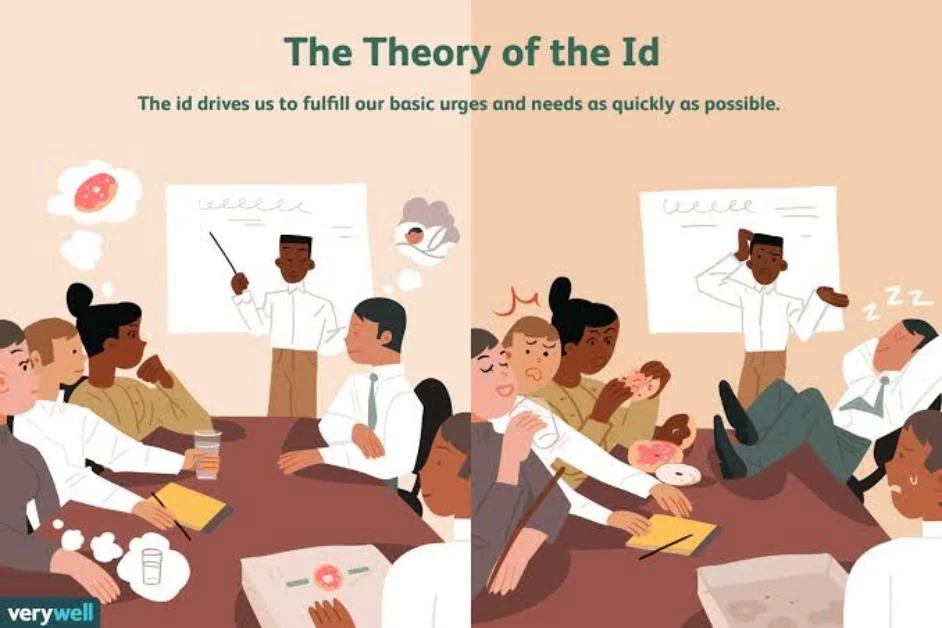
Outside texting and social media, ID has many established meanings. This is one reason the abbreviation can be confusing.
Identification
This is one of the most common meanings.
- “Please show your ID.”
- “I need a valid ID.”
Identification Number
Businesses and websites often use ID to describe a unique number assigned to something.
Examples include:
- Customer ID
- Employee ID
- Order ID
- Student ID
- Transaction ID
User ID
Technology platforms often use User ID to identify an account or person within a system.
Identity
In some contexts, ID can be used informally when discussing identity, although the exact wording depends on the field.
Interior Design
In professional and educational settings, ID can also stand for interior design.
Infectious Disease
In healthcare-related writing, ID can be an abbreviation for infectious disease or the related medical specialty. The exact meaning depends on the context.
Instructional Design
In education and training, ID may refer to instructional design.
This shows why context matters so much. The same two letters can mean something completely different in a text message, a computer system, a business document, or a professional conversation.
Common Confusions, Mistakes & Wrong Interpretations
One of the biggest mistakes people make with ID is assuming that it always has the same meaning.
For example, if someone writes:
“IDK what to do.”
The intended abbreviation is IDK, meaning “I don’t know.” It would be incorrect to interpret the entire expression as “identification.”
Another common mistake is confusing ID with I’d.
- I’d = I would / I had
- ID = often identification or part of an abbreviation
For example:
“I’d go with you.”
This means “I would go with you,” not “identification.”
People can also misunderstand ID when it appears in account-related conversations.
For example:
“Send me your ID.”
This could mean an identification document, a user ID, an account number, or another identifier.
Common mistakes
- Assuming ID always means “identification.”
- Confusing ID with I’d.
- Reading IDK as simply “ID.”
- Ignoring the words around the abbreviation.
- Assuming social media slang has only one meaning.
The safest approach is simple: read the complete sentence before deciding what ID means.
If the context remains unclear, asking the sender is perfectly normal.
Similar Terms, Alternatives & Related Slang
Several abbreviations are closely related to ID, especially when ID appears as part of casual texting slang.
Some useful examples include:
- IDK — I don’t know
- IDC — I don’t care
- IDM — I don’t mind
- IDTS — I don’t think so
- IIRC — if I recall correctly
- IMO — in my opinion
- TBH — to be honest
- IK — I know
- IKR — I know, right?
- WYM — what you mean / what do you mean
For example, someone might write:
“IDK, maybe we should wait.”
Another person could respond:
“IKR, it’s probably better.”
If you’re building an abbreviation glossary, it can be useful to link related pages together. For example, an ID meaning in text article could internally link to pages about IDK meaning, IDC meaning, IK meaning, and WYM meaning.
These related terms help readers understand how short forms work together in real online conversations.
Examples of ID in Real Chat Situations
Here are some realistic examples showing how ID can appear in different conversations.
Example 1: Casual texting
Person A: “Are you coming tonight?”
Person B: “IDK yet 😅”
Meaning: I don’t know yet.
Example 2: Making plans
Person A: “Do you know if Sarah is coming?”
Person B: “IDK. I’ll ask her.”
Meaning: I don’t know.
Example 3: Identification
Person A: “They need an ID to enter.”
Person B: “Okay, I’ll bring mine.”
Meaning: identification document.
Example 4: Online account
Person A: “What’s your user ID?”
Person B: “I’ll send it to you.”
Meaning: account identifier.
Example 5: Order tracking
Person A: “Can you send me the order ID?”
Person B: “Sure, give me a second.”
Meaning: order identification number.
Quick takeaway
The exact meaning comes from context. IDK and ID should not automatically be treated as the same abbreviation.
How to Reply When Someone Says ID
Your response should depend on what the sender means by ID.
If they use ID as part of a phrase such as IDK, you usually don’t need to address the abbreviation itself. Simply respond to the message.
For example:
Them: “IDK what happened.”
You: “No worries. We can figure it out.”
If someone asks for your identification, you can answer directly:
Them: “Can you show me your ID?”
You: “Sure.”
If someone asks for an account ID:
Them: “What’s your user ID?”
You: “It’s [your username or ID].”
If you genuinely cannot tell what they mean, asking for clarification is the easiest solution.
You could say:
- “What do you mean by ID?”
- “Do you mean your user ID?”
- “Are you asking for identification?”
- “Which ID do you need?”
There is no need to overthink a short abbreviation. Context and a quick clarification usually solve the problem.
Is ID Still Popular? Trends & Online Usage
ID remains widely recognizable because it is not only an internet abbreviation. It has long been used as a standard shorthand for identification and appears in technology, business, education, travel, and everyday communication.
Its popularity in texting is also connected to larger abbreviation patterns. People continue to shorten common phrases because quick messages are easier to type and read.
Abbreviations such as IDK, IDC, IK, and WYM remain familiar across casual digital conversations. However, the popularity of individual slang terms can vary between age groups, platforms, communities, and regions.
Social media has also made context more important. A person may use ID in one message to mean an account identifier and use IDK in another message to mean “I don’t know.”
What to remember
- ID has meanings beyond internet slang.
- IDK is different from standalone ID.
- The surrounding words usually reveal the intended meaning.
- ID remains common in technology and everyday language.
- Platform and conversation context can change the interpretation.
For SEO and internal linking, related pages such as IDK meaning in text, IDC meaning in text, and IK meaning in text can help readers explore similar abbreviations.
Frequently Asked Questions
What does ID mean in text messages?
ID can have different meanings in text messages. It may refer to identification, an ID number, or form part of another abbreviation such as IDK, meaning “I don’t know.”
What does IDK mean in texting?
IDK means “I don’t know.” It is one of the most common casual texting abbreviations.
Does ID mean “I don’t”?
Sometimes ID can represent “I don’t” when it is used as part of a longer abbreviation, such as IDK or IDC. As a standalone term, its meaning depends on context.
What does ID mean on Instagram?
On Instagram, ID may refer to an account identifier, user identification, or appear as part of a texting abbreviation. The exact meaning depends on the message.
What does ID mean on WhatsApp?
On WhatsApp, ID may refer to identification or an account-related identifier. It can also appear as part of abbreviations such as IDK.
Is ID the same as I’d?
No. I’d usually means “I would” or “I had,” while ID commonly refers to identification or another context-specific abbreviation.
What does user ID mean?
A user ID is an identifier used by a website, application, or system to distinguish one account from another.
Conclusion:
The ID meaning in text depends on the context in which it appears. In everyday language, ID most commonly refers to identification or an identification number.
In texting, however, it can also appear as part of abbreviations such as IDK, IDC, and IDM.
The easiest way to understand it is to look at the entire message instead of focusing only on the two letters. On WhatsApp, Instagram, TikTok, and Snapchat, people may use ID for account-related purposes or as part of casual texting slang.
If you’re unsure what someone means, simply check the surrounding words or ask for clarification.
Once you become familiar with common abbreviations, recognizing ID and related terms becomes much easier. For more texting meanings, explore related abbreviation pages such as IDK, IDC, IK, and WYM.