Have you ever received a text that says “SMH” and wondered what it means? You are not alone!
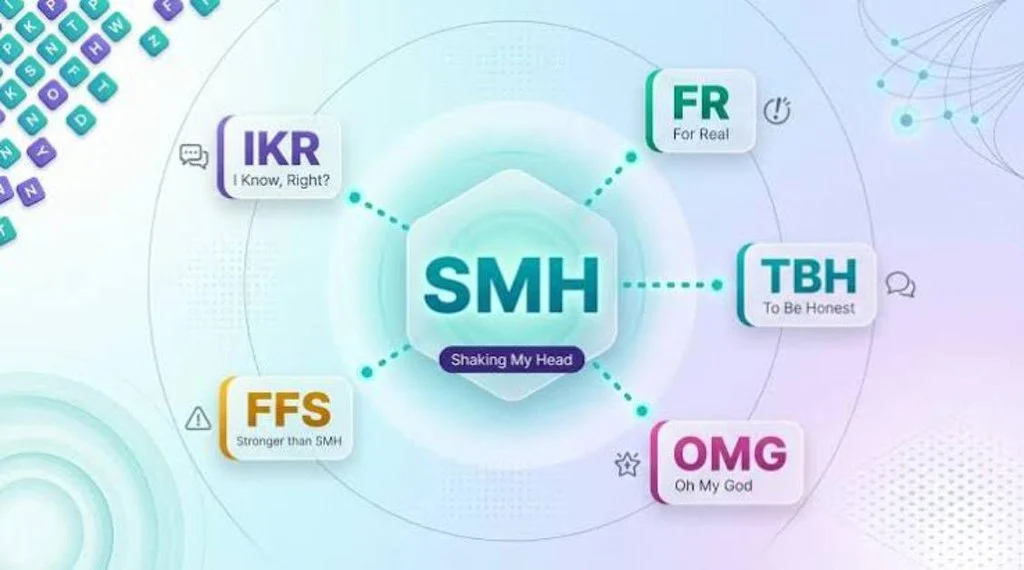
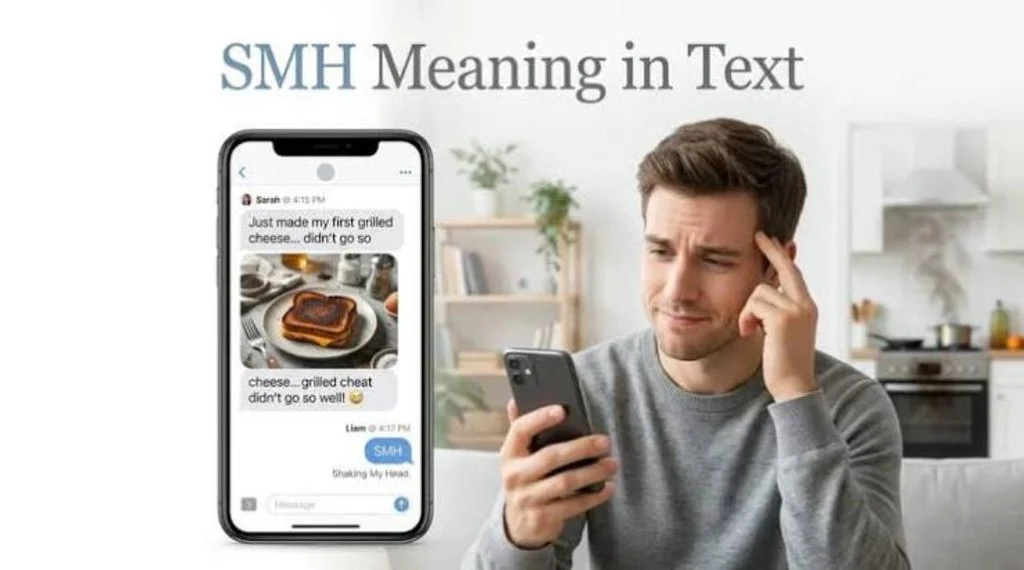
SMH is a popular internet abbreviation used in text messages, social media posts, and online chats. It usually stands for “shaking my head.”
People use it to show disappointment, disbelief, frustration, or surprise when something seems silly or hard to believe. For example, if your friend forgets their homework again, you might reply, “SMH, you did it again 😂.”
This short expression helps people share their feelings without writing a long message. Understanding the SMH meaning in text can make online conversations easier and help you understand the emotions behind a message.
In this guide, you will learn what SMH means, where it came from, how people use it, and how to reply when someone sends it to you.
What Does SMH Mean in Text & Chat?
SMH stands for “shaking my head.” It is used in text messages and online chats when someone feels disappointed, confused, annoyed, or surprised by another person’s words or actions.
Imagine someone tells you that they stayed up all night watching videos and missed an important class. You might reply, “SMH, you need to sleep earlier!” This shows that you cannot believe what they did.
The meaning of SMH depends on the situation. It can express different feelings, such as:
- Disappointment: When someone makes a poor choice.
- Disbelief: When something sounds hard to believe.
- Frustration: When a person repeats the same mistake.
- Amusement: When someone does something silly or funny.
- Mild annoyance: When a situation feels unnecessary or stressful.
SMH is usually informal. People use it with friends, family members, and people they know well. It is less common in formal emails, school assignments, or business messages.
Examples of SMH in Text
- “You forgot your keys again? SMH.”
- “SMH, he really believed that story 😂.”
- “I studied all night and left my notes at home. SMH!”
- “She missed the bus even though she was standing right there. SMH.”
Remember that SMH does not always mean someone is angry. Sometimes it is a playful way to react to a funny mistake. To understand the exact meaning, look at the message and consider your relationship with the person who sent it.
Full Form, Stands For & Short Meaning of SMH
The full form of SMH is “shaking my head.” It describes the action of moving your head from side to side, often to show disagreement, disappointment, or disbelief.
In online conversations, people use SMH as a short reaction rather than describing the physical action. It saves time and makes messages easier to write.
Here is a quick breakdown:
- S: Shaking
- M: My
- H: Head
- Full form: Shaking my head
- Short meaning: Disbelief, disappointment, or frustration
- Tone: Usually casual and sometimes humorous
- Common use: Text messages, comments, and social media chats
For example, imagine your friend says, “I forgot my phone at home, but I am using it right now.” You might respond, “SMH 😂.” Your reply shows that you find the situation confusing or funny.
SMH can also appear at the beginning, middle, or end of a sentence.
- “SMH, that was a bad idea.”
- “I cannot believe he did that, SMH.”
- “You did it again smh.”
The capitalization does not usually change the meaning. People may write it as SMH, smh, or Smh.
It is also helpful to know that SMH is not a complete sentence by itself. Instead, it works as a reaction to something that has happened or been said. The words around it, emojis, and the conversation’s tone help explain whether the person is joking, annoyed, or genuinely disappointed.
Origin, History & First Known Use of SMH
SMH comes from the everyday gesture of shaking your head. People have long used this gesture to express disagreement, disappointment, or disbelief without saying anything.
As internet communication grew, users began turning common expressions into short abbreviations. Text messaging, online forums, chat rooms, and instant messaging made these short forms useful because they helped people communicate quickly.
SMH became widely recognized as internet slang during the growth of online messaging and social media in the 2000s and early 2010s. However, it is difficult to identify one person or exact date that marks its first use. The abbreviation developed through everyday online communication rather than being created by a single known person.
Its popularity increased as people began using it in comments, memes, posts, and private messages. Instead of writing “I cannot believe you did that,” someone could simply type “SMH.”
Today, the abbreviation is familiar to many internet users. It works well in short conversations because it communicates an emotional reaction with only three letters.
Why Did SMH Become Popular?
Several reasons helped SMH spread online:
- It saves time: Three letters are faster to type than a full sentence.
- It shows emotion: It helps express disbelief or frustration in a short message.
- It fits social media: It works well in comments, captions, and replies.
- It is easy to remember: The letters match the first letters of the phrase.
- It works with emojis: Adding 😂, 🙄, or 😭 can make the tone clearer.
The exact history of SMH may be difficult to trace, but its meaning is closely tied to a familiar human gesture. That connection makes it easy for people to understand even when they have never used the abbreviation before.
How People Use SMH in Daily Conversations
People use SMH in everyday conversations when they want to react to something unbelievable, annoying, disappointing, or funny. It is common among friends who chat through text messages or social media.
For example, your friend might tell you that they spent their entire lunch break looking for a phone that was already in their pocket. You could respond, “SMH 😂.” This means you find the mistake silly or hard to believe.
SMH can also show sympathy or frustration about a difficult situation. If someone says they missed an important deadline because their computer stopped working, you might say, “SMH, that is so frustrating.” In this case, the abbreviation expresses a reaction to the problem.
Common Ways to Use SMH
- When a friend makes a mistake: “You left your bag on the bus? SMH.”
- When someone says something unbelievable: “He thinks the moon is bigger than Earth. SMH.”
- When plans go wrong: “The event got canceled again, smh.”
- When someone acts carelessly: “She did not read the instructions. SMH.”
- When joking with friends: “You ate the pizza before I got there? SMH 😂.”
SMH can stand alone as a quick reaction or appear in a longer sentence. Its tone depends on the conversation.
When using SMH, think about how the other person might understand it. A close friend may see it as playful teasing, while someone who is already upset may read it as criticism.
If you want to sound friendly, add a few words to explain your feelings. For example, “SMH 😂 you always do this” sounds more playful than simply writing “SMH.”
The best way to understand SMH is to look at what happened before the message. Context often tells you whether the person is joking, annoyed, or disappointed.
SMH Meaning Across WhatsApp, Instagram, TikTok & Snapchat
SMH has the same basic meaning across most social media platforms: “shaking my head.” However, the way people use it can change depending on the platform and the type of conversation.
SMH on WhatsApp
On WhatsApp, people often use SMH in private chats and group conversations. It can express frustration, surprise, or playful disappointment.
Examples:
- “You forgot to call me again, smh.”
- “SMH 😂 you never listen.”
- “The meeting starts in five minutes and I am still at home.”
On WhatsApp, the meaning often depends on your relationship with the sender.
SMH on Instagram
On Instagram, SMH may appear in comments, direct messages, captions, and reactions to posts. Users might write it when they disagree with a statement or find someone’s behavior unbelievable.
Examples:
- “SMH, why would anyone do that?”
- “That comment makes no sense 🙄 smh.”
- “People really believe this? SMH.”
SMH on TikTok
TikTok users may write SMH in comments about funny videos, surprising stories, online arguments, or questionable behavior.
Examples:
- “SMH, he ignored every warning sign.”
- “I watched this three times and still cannot believe it 😂.”
- “SMH at the way he handled that situation.”
SMH on Snapchat
On Snapchat, SMH can appear in snaps, private chats, and replies to stories. It is often used as a quick reaction between friends.
Examples:
- “You sent that snap to everyone? SMH 😭”
- “SMH, I told you not to touch it.”
- “You missed the whole party? Wow, smh.”
Although the platform changes, the core meaning stays the same. SMH is a short way to react to something that feels foolish, surprising, or frustrating. Always consider the conversation before deciding what the sender means.
Different Meanings of SMH in Other Fields
In everyday texting and social media, SMH usually means “shaking my head.” However, abbreviations can have different meanings in specialized fields, organizations, or local communities.
For most casual conversations, you do not need to search for another definition. If someone writes “SMH” after you tell them an unbelievable story, they are probably expressing disbelief or disappointment.
In a professional or technical document, though, the same letters might be used as an organization name, an internal label, or a field-specific abbreviation. The correct meaning depends on the subject and the surrounding words.
How to Understand SMH Outside Texting
- Online communication: Usually means “shaking my head.”
- Workplace documents: Could be a local abbreviation defined by the organization.
- Technical writing: May have a specialized meaning that depends on the topic.
- Names and initials: Could represent part of a person’s name, a company, or a group.
- Specialist communities: May use the letters in a way that only makes sense to members.
It is important not to assume that every abbreviation has one universal meaning. Three letters can represent different phrases in different settings.
For example, if you see SMH in a text from a friend, the slang meaning is likely. If you see it in a medical report, company document, or technical manual, read the surrounding information before interpreting it.
There is also a difference between a common meaning and a possible meaning. Just because someone could use SMH to represent another phrase does not mean that interpretation is widely accepted.
If you are unsure, ask the writer what they mean or check the glossary provided by the relevant organization. In everyday chat, however, “shaking my head” remains the standard interpretation most people expect.
Common Confusions, Mistakes & Wrong Interpretations
Although SMH is simple, people sometimes misunderstand its tone or confuse it with other texting abbreviations.
The biggest mistake is assuming that SMH always means anger. It can show frustration, but it can also express surprise, disappointment, amusement, or playful disbelief. The message and relationship between the people help determine its tone.
Common SMH Mistakes
- Thinking it always means anger: SMH may be playful rather than hostile.
- Confusing it with an insult: It can criticize someone’s actions without directly insulting the person.
- Assuming it has only one emotional tone: Context can make it funny, serious, or disappointed.
- Reading too much into capitalization: SMH and smh usually mean the same thing.
- Using it in formal writing: It may look too casual in professional emails or official documents.
- Ignoring emojis: An emoji may help show whether the message is playful or serious.
Consider these examples:
- “SMH, you forgot your lunch again 😂.” This is likely playful.
- “SMH. I told you this would happen.” This may express real frustration.
- “SMH 🙄.” This may suggest annoyance or disbelief.
- “SMH 😭.” This could show exaggerated frustration or laughter, depending on the conversation.
Another common confusion is thinking SMH means “so much hate.” That is not its standard meaning in everyday texting. Unless the sender explains a different meaning, “shaking my head” is the safest interpretation.
You should also avoid assuming that someone dislikes you just because they send SMH. They may be reacting to a situation rather than judging you personally.
If a message feels harsh, consider asking, “Are you joking, or are you upset?” A simple question can prevent unnecessary misunderstandings.
Similar Terms, Alternatives & Related Slang
Several internet abbreviations have meanings similar to SMH. Learning them can help you understand online conversations and choose the right response.
Here are some common related terms:
- Facepalm: Used when something is embarrassing, foolish, or frustrating.
- SMFH: Usually means “shaking my f***ing head,” a stronger and more vulgar version of SMH.
- LOL: Means “laughing out loud.” It often shows amusement.
- OMG: Means “oh my God” or “oh my gosh.” It can express surprise or excitement.
- WTF: Usually means “what the f***.” It expresses shock, confusion, or anger and is vulgar.
- IDK: Means “I don’t know.”
- BRUH: A casual reaction to something surprising, silly, or frustrating.
- FR: Means “for real.” It can show agreement or emphasize a statement.
- NGL: Means “not gonna lie.” It introduces an honest opinion.
- SMDH: Means “shaking my damn head,” another stronger version of the original expression.
SMH vs. Similar Abbreviations
SMH is most useful when you want to show disbelief or disappointment. LOL is better when something is funny, while OMG is often used for surprise.
For example:
- “SMH, you forgot again.” — Disappointment.
- “LOL, that joke was great.” — Amusement.
- “OMG, you won the prize!” — Surprise.
- “BRUH, what were you thinking?” — Informal disbelief.
- “IDK what happened.” — Uncertainty.
These expressions can sometimes appear together. Someone might write, “OMG, SMH 😂” to show surprise and disbelief at the same time.
Choose the abbreviation that matches your feeling. If you want your message to sound clear and polite, a full sentence may work better than slang.
Examples of SMH in Real Chat Situations
The easiest way to understand the SMH meaning in text is to see how it works in real conversations. The following examples show how people might use it with friends, family, or online contacts.
Example 1: Forgetting Something
- Alex: “I left my homework on the kitchen table.”
- Sam: “SMH, you packed everything except the one thing you need 😂.”
Here, Sam uses SMH to tease Alex about a small mistake.
Example 2: A Friend Makes a Bad Choice
- Mia: “I spent all my money before payday.”
- Lily: “SMH, you need to make a budget.”
This message shows concern and mild frustration.
Example 3: Something Unbelievable Happens
- Noah: “He tried to open the door even though it clearly said ‘pull.’”
- Ryan: “SMH 😭.”
Ryan thinks the situation is silly or hard to believe.
Example 4: Plans Go Wrong
- Ella: “The bus left just as I reached the stop.”
- Zoe: “SMH, that is so unlucky.”
Here, SMH expresses frustration about an annoying situation.
Example 5: A Social Media Comment
- User 1: “Someone said the Earth is flat.”
- User 2: “SMH, people still believe that?”
The abbreviation shows disbelief about the claim.
Example 6: Friendly Teasing
- Chris: “I watched the same movie twice because I forgot I had already seen it.”
- Jordan: “SMH 😂 your memory needs an update.”
This is a humorous reaction between friends.
Example 7: A Serious Mistake
- Ava: “He shared her private messages without permission.”
- Maya: “SMH. That is not okay.”
In this situation, SMH shows disappointment about someone’s behavior.
These examples show that SMH can sound funny, caring, annoyed, or serious. The words around it and the relationship between the people help reveal the intended tone.
How to Reply When Someone Says SMH
Your reply to SMH depends on what happened and how the other person seems to feel. Sometimes they are joking with you. Other times, they may be disappointed or annoyed.
If a friend sends SMH after you make a silly mistake, you can respond with humor. If they seem genuinely upset, a calm and honest reply is usually better.
Friendly Replies
Use these when the conversation is lighthearted:
- “LOL, I know 😂.”
- “My bad!”
- “It happens to the best of us.”
- “Don’t judge me 😭.”
- “I messed up again, didn’t I?”
Funny Replies
If you and the other person enjoy joking, try:
- “SMH right back at you 😂.”
- “I am doing my best!”
- “Let me live 😅.”
- “At least I tried.”
- “You know how I am!”
Serious Replies
If the person seems upset, respond in a way that addresses the problem:
- “I understand why you’re frustrated.”
- “You’re right. I should have been more careful.”
- “Sorry, I will fix it.”
- “Can you explain what bothered you?”
- “I didn’t mean to upset you.”
How to Choose the Right Reply
Before replying, think about the situation. If the sender adds a laughing emoji, they may be teasing you. If they send a short, serious message after a disagreement, they might be expressing real frustration.
You do not always need to respond with another abbreviation. A simple sentence can prevent confusion and show that you understand their feelings.
For example, if someone writes, “SMH, you forgot our plans again,” you could say, “I’m sorry. I should have remembered, and I’ll make it up to you.”
The best reply is one that fits the situation. Humor works well with close friends, while honesty and kindness are better when the conversation is serious.
Is SMH Still Popular? Trends & Online Usage
SMH remains a recognizable abbreviation in online communication. People use it in text messages, social media comments, memes, and private chats to express disbelief, frustration, or disappointment.
Its lasting appeal comes from its simplicity. Instead of writing a full sentence about an unbelievable situation, a person can type three letters and communicate a familiar reaction.
SMH is also easy to combine with emojis, which can make the intended feeling clearer. For example, “SMH 😂” often sounds playful, while “SMH 🙄” may suggest annoyance. Still, emojis do not guarantee a particular meaning, so context matters.
Why People Continue to Use SMH
- It is short: It makes quick replies easier.
- It is widely understood: Many internet users recognize the abbreviation.
- It works across platforms: People use it in private messages and public comments.
- It expresses emotion: It communicates a reaction without a long explanation.
- It fits casual language: It feels natural in conversations with friends.
Internet slang changes over time, and different age groups may prefer different expressions. However, familiar abbreviations can remain useful even when newer slang appears.
SMH is not limited to one app or age group. Its use depends on personal habits, social circles, and the type of conversation.
You may see it written in capital letters or lowercase, with emojis or without them. These differences usually do not change its basic meaning.
If you are learning internet slang, SMH is a useful abbreviation to know because it appears in many kinds of casual online conversations. Just remember that it is informal and may sound rude if used carelessly in a serious discussion.
Frequently Asked Questions
1. What does SMH mean in texting?
SMH means “shaking my head.” People use it to show disbelief, disappointment, frustration, or amusement about something that happened.
2. What does SMH mean from a girl?
When a girl sends SMH, it usually means “shaking my head.” She may be teasing you, expressing disbelief, or showing annoyance. The meaning depends on the conversation, not her gender.
3. What does SMH mean from a guy?
When a guy uses SMH, he usually means “shaking my head.” He might be reacting to a silly mistake, an unbelievable story, or a frustrating situation.
4. Is SMH rude?
Not always. SMH can be playful or funny between friends, but it may sound dismissive or judgmental in a serious conversation.
5. What does SMH mean on WhatsApp?
On WhatsApp, SMH usually stands for “shaking my head.” People use it in private chats and group messages to express disappointment, surprise, or disbelief.
6. What is the difference between SMH and SMDH?
SMH means “shaking my head,” while SMDH usually means “shaking my damn head.” SMDH often adds stronger emphasis or frustration.
7. Can SMH mean something funny?
Yes. People often use SMH to react to silly mistakes or funny situations. Adding an emoji like 😂 can make the playful tone clearer.
8. How should I reply to SMH?
You can reply with “My bad,” “LOL, I know,” or “What did I do?” if the conversation is casual. If the sender seems upset, acknowledge their feelings and respond honestly.
9. Does SMH mean the person is angry with me?
Not necessarily. The sender might be joking, surprised, or disappointed about something unrelated to you. Look at the context before assuming they are angry.
10. Should I use SMH in professional messages?
It is usually better to avoid SMH in formal emails and workplace documents. Write a clear sentence instead, especially when discussing an important issue.t exist on your website.
Conclusion:
The SMH meaning in text is simple: it stands for “shaking my head.” People use it in messages and online conversations to express disbelief, disappointment, frustration, or amusement. Whether someone sends it on WhatsApp, Instagram, TikTok, or Snapchat, the basic meaning usually stays the same.
However, the tone can change depending on the situation.
A friend might use SMH to tease you about a silly mistake, while another person may use it to show genuine frustration. Emojis and the words around the abbreviation can help you understand the message.
Now that you know what SMH means, you can recognize it in everyday chats and use it naturally when appropriate.
Remember that SMH is informal, so it works best in casual conversations rather than professional writing. When you are unsure what someone means, consider the context or ask them polit