If you spend time texting friends or scrolling through social media, you may have seen the abbreviation FRFR in messages, comments, or captions. So, what does FRFR mean in text?
FRFR stands for “for real, for real.” People use it to show that they are serious, honest, or strongly agree with something.
It adds extra feeling to a message and makes the speaker sound more certain.
For example, a friend might text, “That movie was amazing frfr!” This means the person truly enjoyed the movie. You may see FRFR on WhatsApp, Instagram, TikTok, Snapchat, and other online platforms.
Learning the FRFR meaning in text can help you understand online conversations and respond naturally.
In this guide, we will explain its meaning, origin, common uses, examples, and related slang. You will also learn how to reply when someone uses FRFR in a message.
What Does FRFR Mean in Text & Chat?
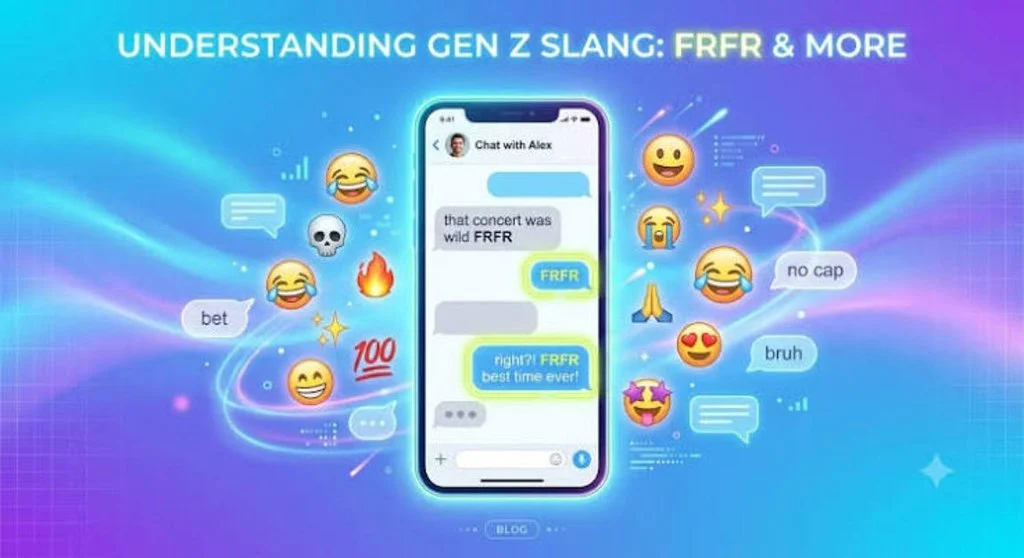
FRFR means “for real, for real.” It is a popular internet abbreviation used in text messages and online conversations. People use it to show that they genuinely mean what they say.
The word “real” can express truth, honesty, or something that feels genuine. Repeating “for real” adds more emphasis. It is like saying, “I really mean it” or “I am not joking.”
FRFR can have different meanings depending on the conversation. It may show agreement, surprise, seriousness, or a strong opinion.
For example, imagine your friend says, “This week has been so stressful.” You might reply, “FRFR, I need a break.” Your response shows that you understand and feel the same way.
Here are some common meanings of FRFR in text:
- Seriously: You truly mean what you say.
- Honestly: You are sharing your genuine thoughts.
- I agree: You strongly agree with someone.
- No joke: You want someone to know you are serious.
- Absolutely: You feel strongly about something.
FRFR is usually casual slang. It works well in conversations with friends, classmates, and people you know online. However, it may not fit formal emails, school assignments, or professional messages.
The meaning also depends on tone. Someone might write “FRFR?” to ask whether another person is serious. Another person might use “FRFR!” to show strong agreement.
In simple words, when you see FRFR in a message, think of phrases such as “seriously,” “honestly,” or “I really mean it.”
Full Form, Stands For & Short Meaning of FRFR
The full form of FRFR is “for real, for real.” It comes from repeating the phrase “for real” to make a statement stronger.
In everyday English, people often repeat words to add emotion. For example, someone might say “really, really good” instead of simply saying “good.” FRFR works in a similar way, but it is shorter and more convenient for texting.
Here is a quick breakdown of the abbreviation:
- FR: For real.
- FRFR: For real, for real.
- Short meaning: Seriously, honestly, or truly.
- Main purpose: To add emphasis or show strong agreement.
- Typical tone: Casual, friendly, and expressive.
Consider this example:
Friend: “You are the funniest person in our group.”
You: “FRFR 😂”
Your reply suggests that you agree or feel the statement is genuinely true, depending on the conversation.
Here are a few more examples:
- “I need a vacation FRFR.” — I seriously need a vacation.
- “That song is perfect FRFR.” — I genuinely love that song.
- “FRFR, you helped me a lot.” — Honestly, you helped me a lot.
- “Are you leaving FRFR?” — Are you really leaving?
FRFR does not have a completely different meaning from the phrase “for real.” Instead, it gives the phrase extra emphasis. The exact feeling depends on the words around it.
People sometimes write FRFR in capital letters, while others use lowercase letters and type “frfr.” Both forms are common in informal digital communication.
You do not need to memorize a complicated definition. Just remember that FRFR usually means someone is being serious, expressing genuine feelings, or strongly agreeing with another person.
Origin, History & First Known Use of FRFR
FRFR developed from the everyday English expression “for real.” People have used “for real” in conversation for a long time to ask whether something is true or to show that they are serious.
The phrase became especially useful in casual speech, music, and youth culture. Repeating it as “for real, for real” adds emphasis. The abbreviation FRFR then became a convenient way to express that idea in digital messages.
As text messaging and online chat became more common, people started shortening familiar expressions. This made conversations faster and helped users express feelings with fewer characters.
FRFR fits this pattern because it turns a repeated phrase into four letters. It is easy to type, quick to recognize, and useful in many different conversations.
However, it is difficult to identify one exact person or message that first introduced FRFR. Online slang often develops across different communities, and early uses may not be recorded in searchable sources. Therefore, it is better not to claim a specific inventor or an exact first-use date without reliable evidence.
Today, FRFR is widely associated with internet slang and informal communication. Social media platforms have helped it reach more people, especially through comments, short videos, memes, and viral conversations.
You might see it used in several ways:
- In a text message: “I am tired frfr.”
- In a social media comment: “This is the best one frfr.”
- In a video caption: “Summer is my favorite season FRFR.”
- In a conversation: “FRFR, that was unexpected.”
The history of FRFR shows how ordinary spoken language can become internet slang. A familiar expression gets shortened, spreads through online communities, and becomes part of everyday digital communication.
Although the abbreviation is informal, its meaning is simple. It helps people communicate sincerity, agreement, and strong feelings without writing a long sentence.
How People Use FRFR in Daily Conversations
People use FRFR in daily conversations when they want to sound sincere, emphasize an opinion, or agree strongly with someone. It can make a message feel more natural and expressive.
One common use is to show agreement. If your friend says, “Mondays are the worst,” you might reply, “FRFR.” This means you strongly agree with the statement.
Another use is to show seriousness. For example, if you tell someone, “I am going to start exercising FRFR,” you are saying that you genuinely intend to do it.
FRFR can also show appreciation or excitement. Someone might say, “You are such a good friend FRFR.” This means the person truly values the friendship.
Here are common situations where people use FRFR:
- Agreeing with friends: “That test was so hard FRFR.”
- Sharing feelings: “I miss those days frfr.”
- Giving an honest opinion: “This restaurant is worth trying FRFR.”
- Showing excitement: “That concert was amazing FRFR!”
- Being serious: “I am not joking FRFR.”
- Expressing frustration: “I need some sleep FRFR.”
FRFR can also appear in playful conversations. Friends may use it to exaggerate a feeling for humor. For instance, “I could eat ten pizzas FRFR 🍕” may be an amusing way to express hunger rather than a literal statement.
Context matters because the abbreviation does not always mean the same thing emotionally. A message about a serious problem may use FRFR to stress honesty, while a funny message may use it for dramatic effect.
You can use FRFR naturally in casual messages, but avoid adding it to every sentence. Too much slang can make a message harder to read or sound repetitive.
The easiest way to use FRFR is to place it at the end of a statement when you want to emphasize that you genuinely mean it.
FRFR Meaning Across WhatsApp, Instagram, TikTok & Snapchat
FRFR usually has the same meaning across social media platforms: “for real, for real.” However, the way people use it may change depending on the type of conversation.
FRFR Meaning on WhatsApp
On WhatsApp, people often use FRFR when chatting with friends, family members, or group chats. It can express agreement, honesty, or a strong feeling.
Examples:
- “I am exhausted frfr 😭”
- “You should come with us FRFR.”
- “That was a great day frfr ❤️”
In private chats, FRFR often makes a message sound more personal and relaxed.
FRFR Meaning on Instagram
On Instagram, FRFR appears in comments, captions, direct messages, and story replies. Users often write it when agreeing with a post or praising a photo or video.
Examples:
- “Best outfit frfr 🔥”
- “This is so true FRFR.”
- “Your pictures are amazing frfr.”
It can also appear in funny comments or relatable posts.
FRFR Meaning on TikTok
TikTok users may use FRFR in video captions, comments, and conversations about trends. It often expresses agreement with a relatable situation or a creator’s opinion.
Examples:
- “School needs to end already frfr.”
- “This sound is addictive FRFR.”
- “I would do the same thing frfr 😂”
The abbreviation is useful in short comments because it communicates a strong reaction without requiring a full sentence.
FRFR Meaning on Snapchat
On Snapchat, FRFR is common in quick messages and snaps between friends. It may show that someone is serious, excited, or being honest.
Examples:
- “Are you coming tonight FRFR?”
- “I had so much fun frfr.”
- “You have to tell me everything FRFR.”
Across all four platforms, the core meaning stays the same. The surrounding message, emojis, and relationship between the people help explain the intended tone.
Different Meanings of FRFR in Other Fields
FRFR is mainly known as internet slang for “for real, for real.” In ordinary texting, this is the meaning most people expect. Still, abbreviations can have different meanings in specialized settings.
For example, a workplace, technical document, gaming community, or private group may use the same letters for an unrelated phrase. Such uses depend on the subject and the people involved.
It is important not to assume that every appearance of FRFR refers to internet slang.
Here are a few contexts to consider:
- Texting and social media: Usually means “for real, for real.”
- Gaming chats: Often expresses agreement, seriousness, or a strong reaction.
- Private group chats: Could have a special meaning understood only by the group.
- Technical documents: May be an organization-specific abbreviation that needs context.
- Workplace communication: Could represent an internal term, project name, or process.
There is no single alternative full form that applies to every field. If FRFR appears in a technical report or professional document, check the surrounding sentence or the document’s abbreviation list before deciding what it means.
For example, if someone writes, “That update fixed the problem FRFR,” the slang meaning is likely. However, if the letters appear in a table of technical codes, they may refer to something else.
The same rule applies to usernames, brand names, and online communities. Some people may use FRFR as part of a name or a personal expression without intending the standard slang definition.
When you are unsure, consider three things:
- What is the conversation about?
- Is the person chatting casually or discussing a technical topic?
- Does the surrounding text support the meaning “for real, for real”?
For everyday texting and social media, you can usually understand FRFR as an expression of honesty, seriousness, or strong agreement.
Common Confusions, Mistakes & Wrong Interpretations
Although FRFR is easy to understand once you know its meaning, people sometimes confuse it with other abbreviations or interpret its tone incorrectly.
One common mistake is thinking FRFR means only “I agree.” Agreement is one use, but it can also show honesty, seriousness, or emphasis.
For example, “I am moving next month FRFR” does not simply mean “I agree.” It suggests that the speaker is serious about the plan.
Another mistake is confusing FRFR with FR. Both are related, but FRFR repeats the phrase for extra emphasis. FR usually stands for “for real,” while FRFR means “for real, for real.”
Here are some common misunderstandings:
- Mistake: FRFR is always a question.
Correction: It can be a statement, a reaction, or a question depending on punctuation and context. - Mistake: FRFR means the person is angry.
Correction: It does not automatically express anger. It may sound friendly, excited, serious, or frustrated. - Mistake: FRFR is formal English.
Correction: It is informal slang, so it is better suited to casual communication. - Mistake: FRFR and FR mean exactly the same thing in every situation.
Correction: They share a basic meaning, but FRFR often adds stronger emphasis. - Mistake: FRFR always proves that someone is telling the truth.
Correction: It shows how a person wants to express themselves, but it does not prove that their statement is true.
Tone can also be misunderstood because text messages do not always show facial expressions or voice. A short reply such as “FRFR” might seem serious, but the sender could simply be agreeing casually.
To understand the intended meaning, read the whole conversation instead of focusing on four letters alone. Emojis, punctuation, and the relationship between the speakers can provide useful clues.
If the message still seems unclear, asking “Do you mean seriously?” is a simple way to avoid misunderstanding.
Similar Terms, Alternatives & Related Slang
FRFR belongs to a large group of internet abbreviations that people use to express agreement, honesty, and strong feelings. Learning a few related terms can help you understand online conversations more easily.
Here are some common alternatives:
- FR: Short for “for real.” It expresses honesty or agreement.
- ONG: Commonly means “on God.” It is used to emphasize sincerity or make a strong statement.
- NGL: Means “not gonna lie.” People use it before sharing an honest opinion.
- TBH: Means “to be honest.” It introduces a sincere thought or feeling.
- ISTG: Means “I swear to God.” It can express frustration, surprise, or strong emphasis.
- IKR: Means “I know, right?” It shows agreement with another person.
- No cap: Means “no lie” or “I am being honest.”
- Deadass: Informal slang that can mean seriously or genuinely, especially in some American English contexts.
- Facts: A casual way to agree strongly with a statement.
- ONG FR: Combines “on God” and “for real” to add emphasis.
Here are these terms in short examples:
- “That was funny FR.” — That was genuinely funny.
- “NGL, I was nervous.” — Honestly, I was nervous.
- “TBH, I like this song.” — To be honest, I like this song.
- “IKR! That was amazing.” — I agree with you.
- “No cap, this is delicious.” — I am not lying; this tastes great.
- “Facts, we need a break.” — I strongly agree.
Although these expressions overlap, they are not always interchangeable. NGL often introduces a personal opinion, while IKR responds to something another person said. FRFR places more emphasis on being serious or genuine.
Choose the term that matches your meaning and the style of the conversation. You do not need to use every slang abbreviation to sound natural online.
Examples of FRFR in Real Chat Situations
The best way to understand FRFR is to see how people use it in everyday messages. These examples show how the abbreviation can express agreement, honesty, excitement, and seriousness.
1. Agreeing With a Friend
Friend: “This homework is taking forever.”
You: “FRFR 😭”
Meaning: You strongly agree that the homework is taking too long.
2. Giving an Honest Opinion
Friend: “Do you like my new haircut?”
You: “Yes, it looks great frfr!”
Meaning: You genuinely like the haircut.
3. Talking About Food
Friend: “This pizza is the best thing ever.”
You: “FRFR 🍕”
Meaning: You agree that the pizza is excellent.
4. Showing Excitement
Friend: “Our favorite singer is coming to town!”
You: “No way! I need tickets FRFR 🔥”
Meaning: You are genuinely excited and really want to attend.
5. Being Serious About a Plan
Friend: “Are you actually going to start studying tonight?”
You: “Yes, FRFR. I have to prepare for the test.”
Meaning: You are serious about studying.
6. Expressing Appreciation
Friend: “You always help me when I need it.”
You: “You can count on me frfr ❤️”
Meaning: You genuinely want to support your friend.
7. Sharing Frustration
Friend: “The internet stopped working again.”
You: “This happens every day FRFR 😩”
Meaning: You are emphasizing how often the problem occurs.
8. Asking if Someone Is Serious
Friend: “I might move to another city.”
You: “FRFR? When?”
Meaning: You want to know whether the person is serious.
9. Complimenting Someone
Friend: “I finally finished my project.”
You: “You did an amazing job frfr 👏”
Meaning: You genuinely think the work is excellent.
10. Talking About a Good Day
Friend: “Today was so much fun.”
You: “FRFR, we should do it again soon!”
Meaning: You agree and want to repeat the experience.
These examples show that FRFR is flexible. It can appear at the beginning or end of a sentence, or stand alone as a short reply. Its purpose is usually to add emphasis and make your message sound genuine.
How to Reply When Someone Says FRFR
Your reply to FRFR depends on what the other person is talking about. Since the abbreviation usually adds emphasis or shows agreement, you can respond naturally without using another slang term.
If someone uses FRFR to agree with you, you can continue the conversation or share more of your thoughts. If they use it to ask whether you are serious, give a clear answer.
Here are some simple replies for different situations:
- When someone agrees with you: “Exactly!”
- When someone says something is true: “I know, right?”
- When someone asks if you are serious: “Yes, I mean it.”
- When someone shares exciting news: “That sounds amazing!”
- When someone compliments you: “Thank you! ❤️”
- When someone expresses frustration: “I feel you.”
- When someone shares a strong opinion: “I get what you mean.”
- When someone uses FRFR as a question: “Yes, seriously!” or “No, I was joking.”
You can also reply using familiar slang if it feels natural:
- “FR 😂”
- “Facts!”
- “No cap.”
- “IKR!”
- “For real!”
- “Same here.”
For example:
Friend: “We need a holiday FRFR.”
You: “Absolutely! I need a break too 😭”
Your reply acknowledges the feeling and keeps the conversation going.
You do not have to repeat FRFR in your response. A normal sentence works just as well. The goal is to respond to the message rather than focus too much on the abbreviation.
If you are unsure what the sender means, look at the conversation or ask a quick question. Most of the time, though, FRFR is simply a casual way to emphasize a feeling or show strong agreement.
Is FRFR Still Popular? Trends & Online Usage

FRFR remains a recognizable form of internet slang, especially in informal conversations and social media discussions. Its appeal comes from its short length and simple meaning. Instead of typing “I am being completely serious,” someone can write “FRFR.”
The abbreviation fits well with modern digital communication, where users often prefer short phrases, emojis, and quick reactions. It can be used in a message, video caption, comment, or group chat without needing much explanation.
FRFR is also easy to understand once someone knows the phrase “for real.” This makes it useful across different online communities, although slang preferences can vary by age, region, and platform.
People may use it to respond to relatable videos, agree with popular opinions, or emphasize personal experiences. For example:
- “This weather is too hot FRFR.”
- “That ending was unexpected frfr.”
- “Best day of the year FRFR.”
- “I need more sleep frfr 😴”
However, the popularity of individual slang terms changes over time. Without current usage data, it would be inaccurate to claim that FRFR is the most popular abbreviation or that its use is increasing everywhere.
You may see it less often in professional communication, formal writing, and conversations with people who do not use internet slang. That does not make the abbreviation incorrect; it simply means that it suits some settings better than others.
If you want to understand modern texting, learning FRFR is useful because it expresses a common idea: being genuine or serious about something.
Use it when the conversation is casual and the meaning feels natural. In formal settings, phrases such as “seriously,” “honestly,” and “I genuinely agree” are usually clearer.
Frequently Asked Questions
1. What does FRFR stand for in texting?
FRFR stands for “for real, for real.” It is an informal abbreviation used to express honesty, seriousness, or strong agreement.
2. What does FRFR mean from a girl?
When a girl texts FRFR, she usually means “for real, for real.” She may be agreeing with you, emphasizing her feelings, or showing that she is serious. The exact meaning depends on the conversation.
3. What does FRFR mean from a boy?
When a boy uses FRFR, it generally has the same meaning: “for real, for real.” He may be expressing an honest opinion, agreeing with something, or making it clear that he is not joking.
4. What does FRFR mean on WhatsApp?
On WhatsApp, FRFR means “for real, for real.” People use it in private chats and group messages to show sincerity, agreement, or strong feelings.
5. What is the difference between FR and FRFR?
FR means “for real,” while FRFR means “for real, for real.” Both can express honesty or agreement, but FRFR often adds extra emphasis.
6. Is FRFR a positive or negative expression?
FRFR can be positive, negative, or neutral. Someone might use it to praise a friend, complain about a problem, or agree with an ordinary statement. The surrounding words determine the tone.
7. How do you use FRFR in a sentence?
You can use FRFR at the beginning or end of an informal sentence. For example, “I really need a break FRFR” means that you genuinely need a break.
8. Is FRFR appropriate for formal messages?
FRFR is usually not suitable for formal emails, business reports, or academic writing. Use phrases such as “seriously,” “honestly,” or “I genuinely agree” in those settings.
9. Does FRFR mean the same thing on TikTok and Instagram?
Yes. On both platforms, FRFR usually means “for real, for real.” Users often add it to captions, comments, and messages to emphasize a reaction or opinion.
10. Can FRFR be used as a question?
Yes. Someone might write “FRFR?” to ask whether another person is serious or telling the truth. The question mark helps show the intended meaning.hat tells readers what each linked page explains.
Conclusion:
Understanding the FRFR meaning in text makes online conversations easier to follow. FRFR stands for “for real, for real,” and people use it to show honesty, seriousness, or strong agreement. You may see it in WhatsApp messages, Instagram comments, TikTok videos, Snapchat chats, and other informal online conversations.
The abbreviation is simple, but its tone can change with the situation.
It may express excitement, support, frustration, or a genuine opinion. You can usually understand its meaning by reading the full message and considering the conversation around it.
Remember that FRFR is casual slang, so it works best when chatting with friends or posting on social media. In professional or formal writing, words such as “honestly” and “seriously” are better choices.
Now that you know what FRFR means, you can recognize it easily and use it naturally when the moment feels right.